Backflow
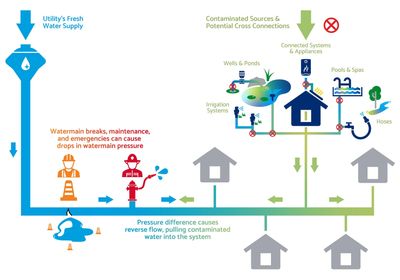
What's Backflow?
If pressure changes within a water system, contaminated water can be pushed or pulled into the drinkable water. This happens when water flows the wrong way through the plumbing pipes. Backflow prevention helps keep drinking water safe by using check valves.
Backflow Preventers
Backflow preventers are mechanical devices with moving parts that wear out over time. Testing and maintaining them makes sure it is working properly. If worn parts are found, they need to be replaced to keep the device working or it may be time to replace the whole backflow preventer.
Common Backflow Examples
Garden Hoses:
A hose left in a pool, bucket or standing water can pull that water back into the plumbing if water pressure suddenly drops.
Irrigation Systems:
Sprinkler systems can pull in dirt, fertilizer, pesticides or bacteria from pooling stagnant water during pressure changes if they aren't properly protected.
Commercial Buildings:
Fire sprinkler systems, boilers, pumps, and other commercial equipment can pose a serious risk. Fire suppression water sits stagnant in metal piping for long periods of time causing the water to rot, corrode and grow bacteria. Some commercial properties use chemicals as part of their daily operations. Backflow prevention helps keep those chemicals from entering the water.
Protect Your Water
Backflow testing helps make sure your backflow preventer is doing its job—keeping the drinking water safe and helping you stay in compliance with your local water provider.